AI Researcher Career Path​

Fully funded training. We’ll help you land your first professional role
Elite Training for the Frontlines of Industrial AI

What is an AI Researcher in Industry?

An AI Researcher in industry leads the development of models and algorithms that address real organizational needs, drawing on expertise in AI, statistics, and mathematics. The role involves developing a deep understanding of business problems and the ability to frame them in a way that enables data driven solutions based on the data available within the organization. This includes selecting appropriate approaches and building models that can be implemented in a production environment.

This is a highly applied role that combines analytical thinking, systematic work with data, and the ability to take a model from initial concept to a working solution within an existing system.

AI Researchers operate at the core of the model layer while maintaining a strong understanding the broader system in which their solutions are integrated. As a result, their work is not purely theoretical but becomes part of an active product or operational system.

The Role of an AI Researcher in an Organization

An AI Researcher is responsible for developing and leading model development as part of AI and Data teams.

Key responsibilities include:

  • Translating business problems into algorithmic or machine learning problems
  • Selecting appropriate statistical and algorithmic approaches
  • Developing models and evaluating their performance
  • Improving results based on quantitative metrics
  • Collaborating with engineering, data, and infrastructure teams to integrate the solution into the product

The role combines deep analytical thinking with hands on responsibility for delivering practical solutions within an industrial R&D environment.

AI and Data Career Paths

The AI Researcher career track is designed to prepare participants for advanced AI and Data roles in the industry. Depending on their academic background and personal profile, graduates typically pursue positions such as:

  • Data Scientist
  • Machine Learning Engineer
  • Deep Learning Engineer
  • Computer Vision Engineer
  • NLP Engineer
  • AI Algorithmic
  • And more

The program is intended for individuals who aim to join R&D teams and work on building models, analyzing data, and developing AI solutions as part of active products.

The work combines model development, working with data infrastructure, and collaboration with engineering and product teams, with the goal of creating solutions that deliver real business value.

About the Program

The AI Researcher career track in industry (AI Research) is an intensive 32 week training program designed for STEM graduates who want to enter advanced AI roles and lead the development of models, machine learning systems, and AI algorithms within the high-tech industry.

We Are Looking for the 1% Who Will Drive the Other 99%

Artificial intelligence in industry requires the ability to work deeply with data, broad algorithmic understanding, and the capability to apply these skills within real systems.

The program is designed for candidates with a strong quantitative academic background, including graduates with Bachelor’s, Master’s, or research based PhD degrees, who want to operate at the forefront of AI and Data. The training emphasizes professional excellence and is designed for individuals who aim to work at the technological frontier and lead complex initiatives within organizations.

During the program, participants progress through three core stages:

  • Software Engineering Foundations
  • Data Systems and Architecture
  • Machine Learning and Deep Learning

The program is structured in progressive stages. It begins with building a strong engineering foundation in software development, moves into data infrastructure and systems, and culminates in developing models and integrating them into complete AI solutions.

The training combines quantitative depth with handson work in projects that simulate real R&D environments. Participants learn not only how to develop models, but how to solve real problems and work effectively within engineering and data teams.

The mentorship team and client partnerships department actively work to secure the first role for each graduate; the placement process begins during the program itself. Upon completing the 32 week program, graduates may continue to a focused internship stage designed to prepare them for their specific matched roles.

Duration

32 weeks Sunday - Thursday 08:30-18:30

Location

Jabotinsky 1 Ramat Gan next to Savidor Merkaz train station

Free of charge

A unique WIN-WIN-WIN model, where we help you secure your first job with one of our 300+ client companies

The training takes place at the Infinity Labs R&D offices, located in the heart of the Bursa District in Ramat Gan, within walking distance of Savidor Mercaz train station.

The location provides convenient access from Tel Aviv, the greater Gush Dan area, the Sharon region, and the Shfela, as well as easy access for participants arriving from the north and south of the country via train and public transportation.

What You Will Learn

From Engineering Foundations to Advanced Algorithms

The AI Researcher career track at Infinity Labs R&D is designed as a structured, in depth training program aimed at preparing graduates to lead the development of models, algorithms, and advanced machine learning solutions in the industry.

The program begins with building a strong engineering foundation in software development. It then moves on to developing a systemic understanding of data infrastructure and Big Data environments, and later progresses into machine learning and deep learning, including advanced topics such as generative models.

Throughout the program, participants develop the ability to:

  • Formulate technical and business problems as computational problems
  • Develop advanced models
  • Design systematic experiments and compare different approaches
  • Measure and improve model performance
  • Understand how models operate within a broader industrial system

An in-depth technical breakdown is available in the full syllabus.

Stage 1: Software Development, Engineering Foundations for AI Research

The first stage focuses on building a strong foundation in modern software development, with Python as the primary working language. The goal is not only to learn how to write code, but to develop a solid understanding of data structures, algorithms, and software architecture.

Participants learn to think systematically and precisely while following industry standards, writing clean and maintainable code, and working effectively within R&D teams.

Key topics include:

  • Python, data structures, and algorithms
  • Object oriented and functional programming
  • Working in Linux and managing development environments
  • API design and service architecture
  • Software testing, CI/CD principles, and containerization

This stage establishes the engineering foundation required for deeper work with models later in the program, enabling participants to go beyond simply using existing libraries.

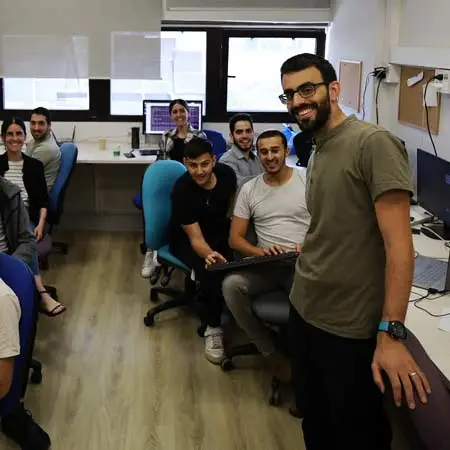
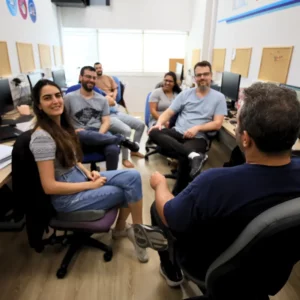
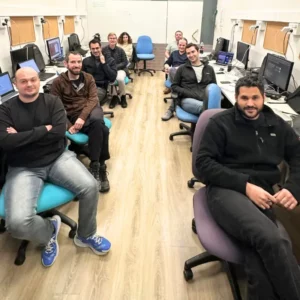
Participants working in development teams during the Infinity Labs training program
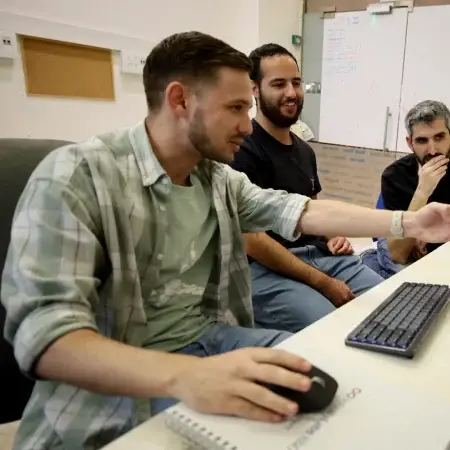
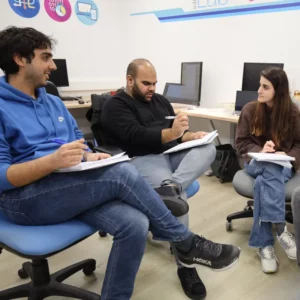
Participant during technology training with mentors at Infinity Labs

Stage 2: Big Data, Understanding the Data Infrastructure That Powers Models

The second stage focuses on the data layer: how data is collected, organized, and processed at scale.

An AI Researcher must understand data quality and the processes used to clean and structure data, since these factors directly influence model performance. For this reason, the program introduces a systemic perspective on data pipelines and the flow of information across an organization.

Key topics include:

  • Data acquisition and data scraping
  • SQL and NoSQL, working with data warehouses
  • Hadoop, Spark and PySpark
  • ETL processes, data pipelines, and data streams
  • APIs, automation processes, and cloud environments

The goal of this stage is to build an understanding of how to design and work with data environments that support real model driven research.

Stage 3: Machine Learning and Deep Learning, The Core of Model Research

The third stage focuses on building models, evaluating their performance, and improving results as part of real industrial workflows.

This stage begins with statistics, exploratory data analysis, and feature engineering. From there, participants learn to develop different types of models and make informed decisions between them based on quantitative performance metrics.

The program then moves deeper into deep learning, including neural networks, CNNs for computer vision, models for NLP, and work with advanced model architectures. In addition, participants are introduced to advanced topics such as generative models and reinforcement learning as part of a broader AI toolkit.

Key topics include:

  • Statistics and exploratory data analysis (EDA)
  • Supervised and unsupervised learning
  • Ensemble methods, clustering, and dimensionality reduction
  • Neural networks and advanced architectures
  • Advanced topics such as generative models and reinforcement learning
  • Model evaluation and performance improvement
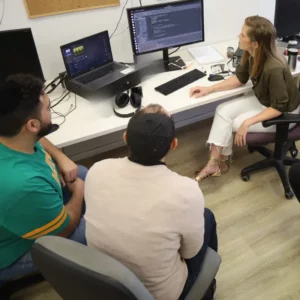
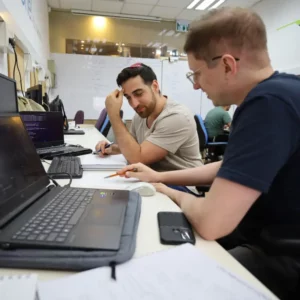
Participant during hands on technology training at Infinity Labs
What You Learn?
From Engineering Foundations to Advanced Algorithms

The AI Researcher career track at Infinity Labs R&D is designed as a structured, in depth training program aimed at preparing graduates to lead the development of models, algorithms, and advanced machine learning solutions in the industry.

The program begins with building a strong engineering foundation in software development. It then moves on to developing a systemic understanding of data infrastructure and Big Data environments, and later progresses into machine learning and deep learning, including advanced topics such as generative models.

Throughout the program, participants develop the ability to:

  • Formulate technical and business problems as computational problems
  • Develop advanced models
  • Design systematic experiments and compare different approaches
  • Measure and improve model performance
  • Understand how models operate within a broader industrial system

An in-depth technical breakdown is available in the full syllabus

Stage 1: Software Development, Engineering Foundations for AI Research

The first stage focuses on building a strong foundation in modern software development, with Python as the primary working language. The goal is not only to learn how to write code, but to develop a solid understanding of data structures, algorithms, and software architecture.

Participants learn to think systematically and precisely while following industry standards, writing clean and maintainable code, and working effectively within R&D teams.

Key topics include:

  • Python, data structures, and algorithms
  • Object oriented and functional programming
  • Working in Linux and managing development environments
  • API design and service architecture
  • Software testing, CI/CD principles, and containerization

This stage establishes the engineering foundation required for deeper work with models later in the program, enabling participants to go beyond simply using existing libraries.

Participants working in development teams during the Infinity Labs training program
Stage 2: Big Data, Understanding the Data Infrastructure That Powers Models

The second stage focuses on the data layer: how data is collected, organized, and processed at scale.

An AI Researcher must understand data quality and the processes used to clean and structure data, since these factors directly influence model performance. For this reason, the program introduces a systemic perspective on data pipelines and the flow of information across an organization.

Key topics include:

  • Data acquisition and data scraping
  • SQL and NoSQL, working with data warehouses
  • Hadoop, Spark and PySpark
  • ETL processes, data pipelines, and data streams
  • APIs, automation processes, and cloud environments

The goal of this stage is to build an understanding of how to design and work with data environments that support real model driven research.

Participant during technology training with mentors at Infinity Labs
Stage 3: Machine Learning and Deep Learning, The Core of Model Research

The third stage focuses on building models, evaluating their performance, and improving results as part of real industrial workflows.

This stage begins with statistics, exploratory data analysis, and feature engineering. From there, participants learn to develop different types of models and make informed decisions between them based on quantitative performance metrics.

The program then moves deeper into deep learning, including neural networks, CNNs for computer vision, models for NLP, and work with advanced model architectures. In addition, participants are introduced to advanced topics such as generative models and reinforcement learning as part of a broader AI toolkit.

Key topics include:

  • Statistics and exploratory data analysis (EDA)
  • Supervised and unsupervised learning
  • Ensemble methods, clustering, and dimensionality reduction
  • Neural networks and advanced architectures
  • Advanced topics such as generative models and reinforcement learning
  • Model evaluation and performance improvement

Inside the Training Experience

The AI Researcher career track is built around the Infinity Labs R&D Mentored Social Learning (IMSL™) methodology, which simulates the experience of working within a real R&D team.

Working in small groups of around 14, participants are guided by an experienced Tech Leader from the R&D and AI fields. The learning process focuses on tackling complex problems, conducting independent research, running systematic experiments, writing production quality code, and critically evaluating results.

The emphasis is not only on reaching a technical solution, but on the process itself – formulating problems, selecting appropriate algorithmic approaches, designing meaningful experiments, and improving models based on clear quantitative metrics.

There are no lectures, no passive learning, and no traditional exams. Success is measured by the ability to take a complex problem, break it down, explore different approaches, implement solutions, measure outcomes, and deliver a high quality result within a defined timeframe.

Learning Principles

  • 100% hands on learning: every topic is taught through real projects
  • A spiral learning process: Challenge → Research → Experiment → Apply → Test → Evaluate
  • Small teams that simulate an industry R&D environment
  • Ongoing guidance from active Tech Leaders from the industry

The program takes place five days a week, Sunday to Thursday, from 08:30 to 18:30, at the Infinity Labs R&D labs in Ramat Gan.

This is a full-time, intensive training program. In most cases, the level of commitment and depth required does not allow participants to work simultaneously.

Who This Program Is For

The AI Researcher career track is designed for graduates in science and engineering fields; including computer science, mathematics, physics, neuroscience, engineering, and other quantitative disciplines who want to deepen their expertise in algorithms, machine learning, and advanced AI model development.

The program is designed for individuals with strong mathematical abilities and analytical thinking who want to develop models rather than rely solely on existing tools.

AI Researchers are expected to understand how models work at a deep level, formulate problems in computational terms, design experiments, and draw precise conclusions from data. This program is for curious and critical thinkers who enjoy exploring complex problems, working with uncertainty, and improving performance over time.

Important Personal Skills

  • Strong analytical and critical thinking
  • Scientific curiosity and the ability to learn independently
  • The ability to formulate problems in mathematical and algorithmic terms
  • Systematic work through iterative cycles of experimentation, measurement, and improvement
  • Persistence and the ability to deal with complex challenges
  • Professional communication and the ability to present insights clearly

Admission Requirements

To maintain the depth and intensity of the program, the admission requirements are clearly defined:

A Bachelor's degree (advanced degrees preferred) from a leading university in a STEM field, with a minimum GPA of 80

Psychometric score of 700 or higher

Demonstrated knowledge of advanced mathematics, including linear algebra, probability, statistics, and calculus

Technical assessment day

HR interview

These requirements ensure that the program maintains the level of depth, pace, and professional standards required for training AI Researchers for industry.

AI and Data Roles Our Graduates Pursue

Graduates of the AI Researcher career track go on to work in advanced AI and Data roles across high tech companies, startups, defense organizations, and global technology firms.

Through training in model development, working with data and infrastructure, and implementing solutions in real industrial environments, graduates join R&D teams where they work on building models, analyzing data, and improving system performance as part of active products.

Based on market analysis and the roles our graduates have taken in recent years, alumni of the program can be found in positions such as:

  • AI Algorithms Engineer
  • Data Scientist
  • Machine Learning Engineer
  • Deep Learning Engineer
  • Computer Vision Engineer
  • NLP Engineer

Depending on their background and the needs of the organization, graduates may also take on additional advanced AI roles focused on model development and data driven systems.

The following examples are based on real graduate stories and data from the field.

AI Researcher Career Track vs. Short AI Courses

Artificial intelligence has become widely accessible through short courses, workshops, and ready made tools. People learn how to use existing models or platforms, but few know how to design, develop, and deploy AI solutions within real organizational environments.

Short courses can provide familiarity with specific algorithms or libraries, but they rarely build the broader professional foundation required for industry work. Developing real AI systems requires strong algorithmic understanding, deep work with data, and the ability to operate within multidisciplinary R&D teams.

The AI Researcher career track at Infinity Labs R&D was designed to train AI and Data professionals at an industry level. It is a structured, intensive program that combines a solid engineering foundation, data infrastructure, and advanced machine learning.

During the program, participants learn to:

  • Build a strong foundation in algorithms and applied mathematics
  • Work with machine learning and deep learning models
  • Work with Big Data and data infrastructure
  • Develop models and integrate them into real production systems

The program is built for those aiming to build a long term career in AI and data - not just gain surface-level familiarity with tools.

Alongside the training, the team prepares participants for the job market and actively works to place graduates in advanced AI and Data roles at leading companies in Israel.


What Makes the Infinity Labs R&D
AI Researcher Program Unique

Graduates successfully trained for a career in high-tech
0 +
Graduates employed in leading high-tech jobs
0 %
High tech companies employ our graduates
0 +
Groups trained in high-tech professions
0 +

Founded in 2014, Infinity Labs R&D is a research and development company that prepares university graduates for careers in high tech through a training environment designed to simulate real industry R&D teams. The program is conducted in small groups of around 14 participants, guided by an experienced Tech Leader, and focuses on working on complex projects at an industry level.

Participants are carefully selected based on strong academic background and quantitative abilities. Throughout the program, they develop systemic thinking, independent problem solving capabilities, and the ability to work within AI and Data teams at leading organizations.

To date, more than 2,500 graduates have secured roles that typically require 2 to 3 years of prior experience, across over 300 high tech companies, defense organizations, and leading development centers.

The combination of deep technical training, work in a real R&D style environment, and a comprehensive placement framework is what differentiates Infinity Labs from other training programs.

Key Advantages

  • Elite training in AI and Data, designed for individuals with strong analytical abilities who aspire to work at the forefront of technology
  • Active Tech Leaders from the R&D and AI fields who guide the training on a daily basis
  • Placement often begins during the program, with additional training tailored to the role
  • A WIN WIN WIN model: the training is fully funded for accepted candidates, is tied to graduates’ long-term integration into industry roles.
  • Comprehensive career and placement support, including access to hundreds of companies and continued guidance after employment

AI Researcher Program FAQ

How long is the AI Researcher program?

The AI Researcher career track at Infinity Labs R&D is an intensive 32 week training program that takes place five days a week at the company’s Ramat Gan labs.

The program is designed for university graduates in STEM fields such as computer science, mathematics, physics, engineering and neuroscience who have strong analytical and mathematical abilities and want to pursue advanced AI and Data roles in the industry.

Short AI courses typically focus on using existing tools or libraries. The AI Researcher career track focuses on developing deep algorithmic understanding, working with data at scale and building machine learning models as part of real production systems.

Academic studies in AI typically emphasize theoretical knowledge and research oriented learning. In contrast, this program is designed to provide applied, industry focused training.

The curriculum is delivered by professionals with extensive industry experience and includes hands-on work with real datasets, machine learning models, and production level systems.

By the end of the program, participants are equipped not only with conceptual understanding, but with the practical skills required to integrate into AI roles within the tech industry.

Graduates of the program go on to work in advanced AI and Data roles such as Data Scientist, Machine Learning Engineer, Computer Vision Engineer and NLP Engineer in technology companies and research organizations.

The training is free for accepted candidates as part of the Infinity Labs R&D training model.

Ready to Lead the Future of AI in Industry?

If you are a STEM graduate with strong mathematical foundations and an ambition to work at the forefront of AI, the AI Researcher career track at Infinity Labs R&D was designed for you.

Training is provided at our expense

Infinity also offers a low-interest loan for trainees through Bank Leumi

up to 50,000 NIS to help with living expenses. Payable upon start of employment or after 1 year.

Leumi logo
Infinity logo

Our Graduates’ Stories

Customer Recommendations

Leave your details and we will get back to you as soon as possible

*Preferred training location
*Did you specialize in computer science or the exact science in high school?
*Are you willing to undergo security clearance?
Please upload your CV (recommended):
By submitting your application, you confirm that you have read and agree to our Privacy Policy.